
Ordering steak in Buenos Aires is one of the highlights of visiting Argentina, but the names on a traditional parrilla menu can be confusing if you’re unfamiliar with local beef cuts. Three names you’ll see frequently are bife de chorizo, ojo de bife and entraña. They’re all popular choices, but they offer different textures, fat levels and flavors.
Whether you prefer a thick steak with a firm bite, a richly marbled cut or a thinner piece packed with beefy flavor, understanding these differences will help you order confidently at an Argentine steakhouse.
- Bife de chorizo: A classic, thick strip steak with a strip of fat along one edge.
- Ojo de bife: A ribeye-style cut with more internal marbling and a rich, juicy texture.
- Entraña: A thinner skirt-style cut known for its concentrated beef flavor and distinctive fibers.
First-time visitor? Choose bife de chorizo for a classic steakhouse experience, ojo de bife if you love rich marbling, or entraña if you want an intensely flavored cut.
1. Bife de Chorizo: The Classic Argentine Steak
Bife de chorizo is one of the best-known steaks on an Argentine parrilla menu. Its closest familiar equivalent for many international visitors is a New York strip steak or strip loin steak, although the precise cut, thickness and fat cap can vary.
The steak is usually boneless, relatively thick and easy to recognize thanks to the band of fat along one side. That outer fat can contribute flavor as the steak cooks over the grill. The meat generally has a firm, satisfying texture and a strong beef flavor without the same level of internal marbling typically associated with ribeye.
What does bife de chorizo taste like?
Expect a straightforward, beef-forward flavor, a browned exterior and a substantial bite. When cooked well, it remains juicy while offering a little more structure than a highly marbled steak. The fat along the edge adds richness, but you can leave it on your plate if you prefer a leaner mouthfeel.
Who should order bife de chorizo?
- First-time visitors who want a traditional Argentine steak.
- Travelers who enjoy a thick, boneless cut with a firm texture.
- People who like a balance between meatiness and moderate fat.
- Anyone who wants a familiar alternative to a strip steak or sirloin-style steak.
2. Ojo de Bife: Rich, Marbled and Juicy
Ojo de bife is the Argentine name for a ribeye-style steak, generally cut from the rib section. It is prized for its intramuscular fat, often called marbling, which appears as fine streaks of fat within the meat. This differs from the more prominent outer fat edge often associated with bife de chorizo.
As the steak cooks, some of that fat softens and contributes to its rich texture and flavor. The result is often a more buttery, succulent eating experience. The exact amount of marbling depends on the animal, the grade of beef and the individual cut.
What does ojo de bife taste like?
Ojo de bife tends to taste richer and feel more tender or luscious than a leaner steak, although tenderness varies. It is an excellent option if you enjoy the flavor of beef fat and want a steak with plenty of character.
Who should order ojo de bife?
- People who love ribeye steaks.
- Travelers who prefer marbling and a rich, juicy texture.
- Steak enthusiasts who enjoy a more indulgent cut.
- Anyone who prioritizes richness over a leaner, firmer bite.
3. Entraña: Thin, Tender and Full of Flavor
Entraña is an Argentine cut taken from the diaphragm area of the animal. Its closest common English-language equivalent is skirt steak, although the exact correspondence can differ according to how a butcher breaks down the carcass.
Compared with bife de chorizo and ojo de bife, entraña is usually thinner and has more visibly pronounced muscle fibers. It is especially popular for its concentrated beef flavor. Many parrillas cook it over strong heat, giving it a browned exterior while avoiding excessive cooking that could make it chewy.
What does entraña taste like?
Entraña delivers a bold, beefy flavor and a more fibrous texture. It can be tender and enjoyable when prepared properly, but it is not identical to the soft, marbled texture of ribeye. Cutting it across the grain helps make each bite easier to chew.
Who should order entraña?
- Travelers who enjoy skirt steak or other flavorful, thin cuts.
- People who prioritize concentrated beef flavor.
- Visitors looking for something different from a conventional thick steak.
- Diners who want a cut that is often cooked more quickly than a thick steak.
Bife de Chorizo vs. Ojo de Bife vs. Entraña
This comparison makes it easier to select a cut based on texture, richness and the type of steak you enjoy most.
| Feature | Bife de Chorizo | Ojo de Bife | Entraña |
|---|---|---|---|
| Closest common equivalent | New York strip / strip steak | Ribeye | Skirt steak |
| Typical appearance | Thick, boneless steak with an outer fat edge | Rounded steak with visible internal marbling | Longer, thinner cut with noticeable fibers |
| Texture | Firm and meaty | Rich and often buttery | Fibrous and satisfying when sliced correctly |
| Fat profile | Often a distinct fat cap | Usually more intramuscular marbling | Varies, but usually less like a heavily marbled ribeye |
| Flavor | Classic, beef-forward | Rich, savory and buttery | Intense and concentrated |
| Cooking style | Grilled as a thicker steak | Grilled to develop a crust while preserving juiciness | Usually cooked relatively quickly over high heat |
| Best for | A classic steakhouse meal | Maximum richness and marbling | Bold flavor and a thinner cut |
These are general comparisons, not exact international butchery standards. The cut’s thickness, trimming, marbling and preparation vary by restaurant.
Which Argentine Steak Cut Is Best for You?
Choose based on what you enjoy eating rather than assuming one cut is universally better than the others. Use this quick selector to find the closest match for your preferences.
Find your ideal steak
What matters most to you?
A thick, meaty steak with an outer fat edge makes it a reliable introduction to the Argentine parrilla.
How to Order Steak at an Argentine Parrilla
Knowing the name of the cut is only part of the experience. You should also understand how the restaurant cooks it, what sides are included and whether the portion is large enough to share.
1. Choose your cut
Start with bife de chorizo for a classic steak, ojo de bife for a richer ribeye-style experience, or entraña for a thin and flavorful cut. If you are dining with friends, consider ordering two different cuts to compare them.
2. Specify how you want it cooked
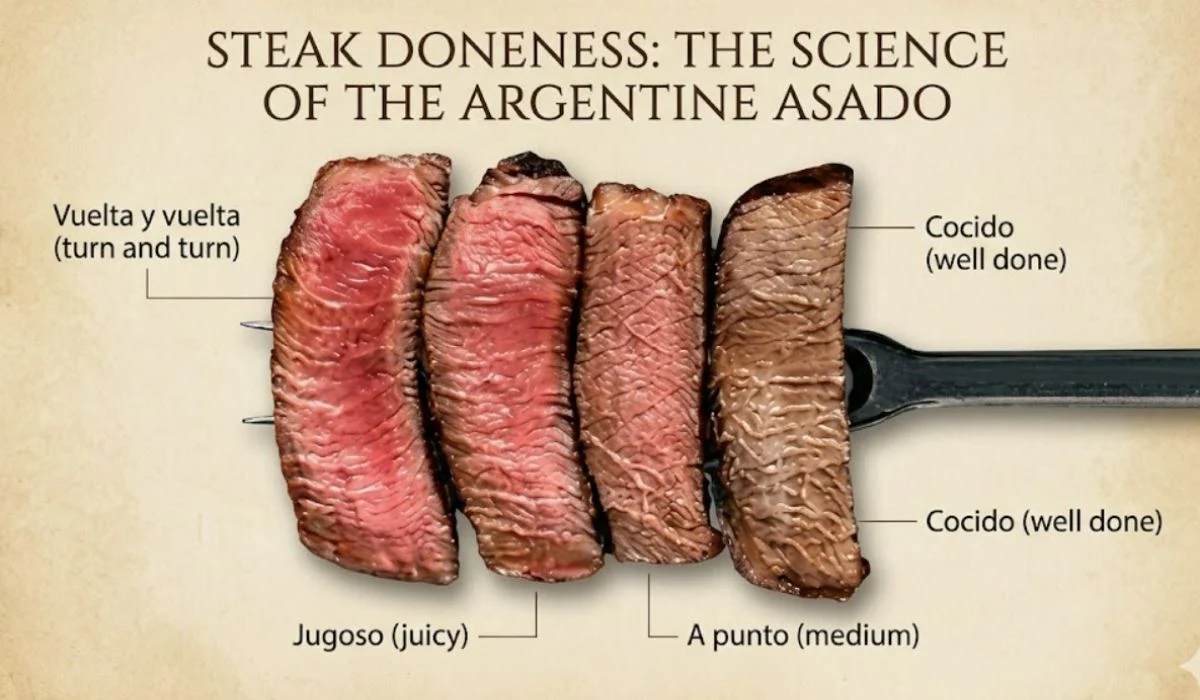
Steak doneness terms can be interpreted differently between restaurants and countries. In Argentina, common terms include jugoso (juicy, generally with a pink or red center), a punto (medium-style) and bien cocido (well done). If the exact center color matters to you, describe it clearly to the server.
3. Ask about portion size and sides
Some steaks are served with no side dishes, while others come with accompaniments depending on the menu. Ask whether the weight refers to the raw cut and whether the portion is suitable for sharing. Common sides include fries, salad and grilled vegetables.
4. Keep the seasoning simple
Many traditional parrillas emphasize the flavor of the beef and the char from the grill. Chimichurri, a herb-based condiment, may be offered on the side. Try a few bites of the steak on its own before adding sauce so you can appreciate the flavor of the cut.
Useful Spanish Phrases for Ordering Steak
These phrases can help you order confidently at restaurants in Buenos Aires. Use the copy buttons to save the wording for your trip.
I’d like a bife de chorizo, please.
Quisiera un bife de chorizo, por favor.
I’d like an ojo de bife, please.
Quisiera un ojo de bife, por favor.
I’d like the entraña, please.
Quisiera la entraña, por favor.
What do you recommend?
¿Qué corte me recomienda?
Can we share this steak?
¿Podemos compartir este corte?
Frequently Asked Questions
Is bife de chorizo the same as chorizo sausage?
No. Bife de chorizo is a beef steak, not a sausage. The name can be confusing for visitors, but it refers to a popular boneless cut commonly compared with a New York strip steak.
Is ojo de bife the same as ribeye?
Ojo de bife is the Argentine name for a ribeye-style cut. The closest equivalent is ribeye, although butchery, trimming and presentation can vary.
Is entraña a tender cut of beef?
Entraña can be very enjoyable when cooked and sliced correctly, but its muscle fibers are more noticeable than those of a tenderloin. Slicing against the grain helps improve the eating experience.
Which steak has the most fat: bife de chorizo or ojo de bife?
Ojo de bife generally has more visible internal marbling, while bife de chorizo is known for its outer fat edge. The actual fat content varies by animal and individual steak.
Which Argentine steak is best for first-time visitors?
Bife de chorizo is a dependable choice if you want a classic thick steak. Choose ojo de bife if you love ribeye and rich marbling, or entraña if you prefer an intensely flavored, thinner cut.
Can I share a steak at a Buenos Aires parrilla?
Many restaurants allow diners to share cuts, but serving sizes and policies vary. Ask the server about the weight and whether sharing is suitable before placing your order.
What is the difference between jugoso and a punto?
Jugoso generally indicates a juicy steak with a pink or red center, while a punto usually refers to a medium-style level of doneness. Restaurant interpretations vary, so explain your preferred center color if you want a particular result.
Final Verdict: Which Steak Should You Try in Buenos Aires?
Bife de chorizo, ojo de bife and entraña each offer a different way to experience Argentine beef. Bife de chorizo is the classic choice for a thick, meaty steak; ojo de bife delivers the richness of a marbled ribeye-style cut; and entraña stands out for its concentrated flavor and distinctive texture.
If this is your first visit to Buenos Aires, start with bife de chorizo or ojo de bife. If you’re dining with friends, order different cuts and compare them. Ask about portion sizes, choose your preferred doneness and enjoy the meal at the pace of a traditional Argentine parrilla.
Further reading: Official Buenos Aires tourism guide to famous steakhouses and beef cuts and Guía Repsol’s guide to ordering meat at an Argentine restaurant.